
Fast scheduling for installations and repairs. Free estimates typically within 24 hours

Fully insured business, with a one-year warranty on every new installation

Fast quotes for installation or repair – transparent pricing with no surprises

Family-owned and operated, serving Austin and nearby communities
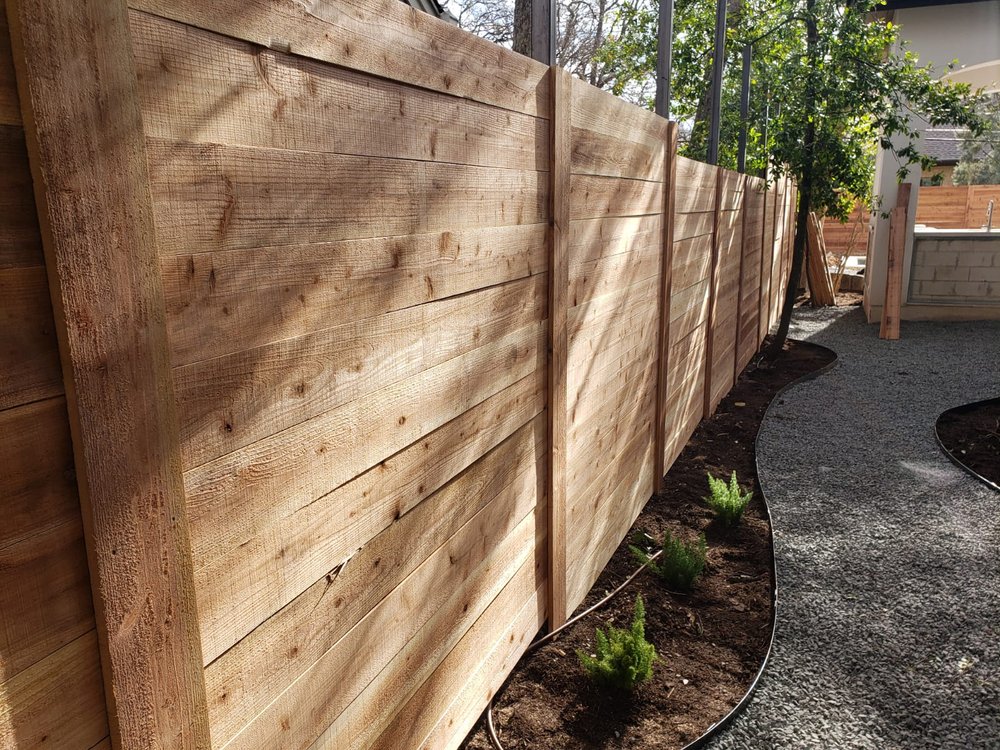
Wood fencing has been the top choice for Austin homeowners for generations – and for good reason. At Philmar Fence, we've built our reputation on constructing beautiful, durable wood fences that withstand Central Texas conditions while providing the privacy and curb appeal you deserve.
Every wood fence we install is custom-built picket by picket. We never use pre-fabricated panels, which allows us to properly follow your property's natural grade and deliver a fence that looks professional from every angle.
Not all wood is created equal – especially in Texas. Our hot summers, occasional flooding rains, and active termite populations demand materials that can handle the stress. Here's what we recommend and why:
Western Red Cedar is the gold standard for Austin wood fences. We source premium-grade Western Red Cedar for the majority of our installations because it outperforms every other option in our climate.
Why Western Red Cedar excels in Central Texas:
Natural Decay Resistance Cedar contains natural oils that protect against rot, mold, and fungal decay. Unlike pressure-treated pine, this protection goes throughout the wood – not just the surface.
Insect Resistance The same natural oils that prevent decay also repel termites and wood-boring insects. In Austin's active termite environment, this is critical for long-term fence performance.
Dimensional Stability Cedar has a low shrinkage factor compared to other woods. This means your fence won't warp, twist, or cup as dramatically when Austin's humidity swings from 20% to 90% throughout the year.
Beautiful Natural Appearance Cedar ranges from light honey tones to rich reddish-brown hues. It weathers to an attractive silver-gray if left natural, or accepts stain beautifully for a maintained appearance.
Sustainability Western Red Cedar requires no chemical treatment or kiln drying. It's harvested from managed forests and has a lower environmental impact than treated lumber.
Our Cedar Specifications:
For budget-conscious projects, pressure-treated pine offers acceptable durability at a lower price point. The wood is treated with chemical preservatives that resist rot and insects.
Considerations for pressure-treated pine in Austin:
Pros:
Cons:
Our recommendation: We install pressure-treated pine when budget is the primary concern, but we always discuss the long-term maintenance requirements with our clients. Over a 15-20 year lifespan, cedar often proves more cost-effective when you factor in reduced maintenance.
Have questions? Contact us today, get your free estimate!
The posts are the structural backbone of any wood fence. Choose the wrong posts, and even the best pickets will fail prematurely.
Metal Posts (Our Recommendation for Most Installations)
Why we prefer metal posts: In Austin's clay-heavy and rocky soils, posts take the most abuse. Clay expands and contracts with moisture, creating lateral pressure that wood posts struggle to resist. Metal posts maintain their position and structural integrity.
Cedar Posts
Pressure-Treated Pine Posts
The most popular choice for Austin backyards. Vertical pickets are installed side-by-side with no gaps, providing complete privacy and wind screening.
Specifications:
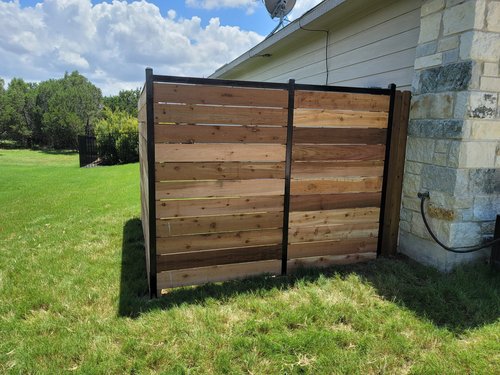
Pickets are mounted on alternating sides of the rails, with each picket overlapping the gap between pickets on the opposite side. This creates a fence with no visible gaps while allowing some airflow.
Benefits:
Ideal for: Shared property lines where both neighbors want an attractive view.
Clean, linear design with boards running horizontally rather than vertically. Extremely popular in Austin's modern neighborhoods and new construction.
Specifications:
Note: Horizontal fences require more vertical posts (typically 4' on center instead of 8') to prevent board sag.
Pickets alternate on each side of the rails, creating a semi-private fence that allows light and airflow while limiting direct visibility.
Benefits:
Classic design with spaced vertical boards, typically 3-4 feet tall. Defines property boundaries without blocking views.
Profiles available: Dog-ear, flat-top, French Gothic, pointed
Cedar Cap & Trim A horizontal cedar board along the top of your fence provides a finished, elegant appearance and helps protect the end-grain of vertical pickets from moisture.
Rot Board A horizontal treated board installed at the bottom of the fence, just above ground level. The rot board takes moisture damage instead of your primary pickets, extending fence life.
Lattice Top Decorative lattice panels installed above a solid privacy section. Provides partial screening while allowing light penetration – popular for garden areas.
Steel Post Sleeves Metal posts can be wrapped with cedar sleeve boards for a finished wood appearance while maintaining metal's structural benefits.
Austin's weather and wildlife can damage even the best-built wood fence. Our fence repair services restore your fence's function and appearance:
Common Wood Fence Repairs:
Rotted Boards & Posts We replace individual rotted pickets or entire sections, matching your existing fence as closely as possible. For post rot, we typically recommend upgrading to metal posts during repair.
Leaning Fences Often caused by post failure or soil movement. We excavate around posts, reset them in fresh concrete, and add bracing if needed. In severe cases, post replacement is more cost-effective than repair.
Storm Damage High winds can snap boards, break posts, and flatten entire sections. We respond quickly to storm damage and work with insurance companies on claims.
Gate Repairs Sagging, dragging, or stuck gates are a common issue. We realign gate frames, replace hinges, adjust latches, and rebuild frames when necessary.
Wood Restoration Pressure washing, sanding, and staining can bring a weathered fence back to life – but only if the underlying structure is sound. We'll assess whether restoration or replacement makes more sense for your situation.
Texas sun is brutal on exposed wood. UV radiation breaks down the wood fibers and causes graying, splintering, and premature deterioration.
Our staining recommendations:
Semi-Transparent Oil-Based Stain Our top recommendation. Penetrates the wood grain, provides UV protection, and allows the natural cedar character to show through. Requires reapplication every 2-3 years.
Solid Stain Provides maximum UV protection and a uniform color. Hides wood grain and natural variation. Good for consistent appearance, but can peel if not properly maintained.
Clear Sealers UV protection without color change. Requires more frequent reapplication (annually) to maintain protection.
Timing: New cedar fences should weather for 30-60 days before staining to allow the wood to dry and open its pores. Pressure-treated pine needs 3-6 months drying time.
At Phimar Fence, we offer a wide range of durable, stylish fence options tailored to enhance your property’s security, privacy, and curb appeal.
Chain Fence: Ideal for cost-effective security, chain link fences are durable, low maintenance, and perfect for enclosing yards, pools, and commercial properties.
Wood Fence: Wood fencing offers a classic, customizable look that enhances privacy and curb appeal while blending naturally with any landscape.
Metal Fence: Strong and long-lasting, metal fences provide premium security and an upscale appearance, great for both residential and commercial properties.
Step 1: Property Survey & Design Consultation We meet you on-site to discuss your needs, review property lines, identify underground utilities (we'll call 811), and recommend the best fence style and materials for your property.
Step 2: Post Installation Posts are set 6-8 feet apart (closer for horizontal designs) in concrete footings. In Austin's rocky soil, we use appropriate drilling equipment to achieve proper depth. Posts cure before we proceed.
Step 3: Rail Installation Horizontal rails are attached to posts, creating the framework that supports your pickets. For fences 6 feet and taller, we install three rails for added strength.
Step 4: Custom Picket Installation Each picket is individually attached – never pre-fabricated panels. This allows us to follow terrain changes smoothly and ensure consistent spacing. For privacy fences, we verify no gaps between pickets.
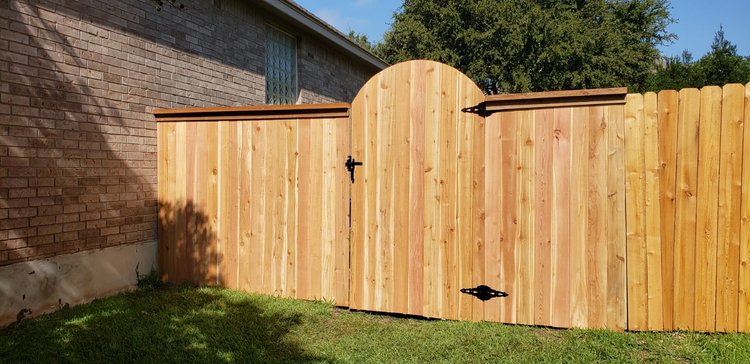
Step 5: Gate Construction & Hardware Gates are built to match your fence design, with welded or heavy-duty wood frames for stability. We install quality hinges, latches, and hardware rated for gate weight.
Step 6: Final Walkthrough We inspect the entire installation, verify gate operation, and review any maintenance recommendations with you.
 Get a quote today
Ready for a wood fence that will make your Austin neighbors jealous?
Contact Philmar Fence at (512) 910-0111 for your free consultation. We serve Austin, Georgetown, Leander, Liberty Hill, Lago Vista, and all of Central Texas.
What type of wood is best for fences in Austin?
Western Red Cedar is our top recommendation for Central Texas. It contains natural oils that resist rot, decay, and termites without chemical treatment. Cedar also handles our humidity swings better than other woods, meaning less warping and twisting over time.
How long does a wood fence last in Texas?
A well-built cedar fence typically lasts 15-20 years with proper maintenance. Pressure-treated pine fences last 10-15 years. Regular staining every 2-3 years and prompt repairs can extend the life of any wood fence.
Should I choose cedar or pressure-treated pine?
Cedar costs more upfront but requires less maintenance and lasts longer. Pressure-treated pine is budget-friendly but more prone to warping in Texas heat and needs more frequent staining. Over 15-20 years, cedar often proves more cost-effective.
Do you use metal or wood posts?
We recommend metal posts for most installations. Austin's clay soil expands and contracts with moisture, which can shift wood posts over time. Metal posts resist this movement and won't rot at ground level, giving your fence a longer lifespan.
How long does wood fence installation take?
Most residential wood fence projects are completed in 2-3 days depending on the size and style. We'll provide a specific timeline during your free estimate.
Do you repair wood fences?
Yes. We repair rotted boards, leaning posts, storm damage, broken gates, and more. In many cases, targeted repairs can extend your fence's life for years without full replacement.
What areas do you serve?
We install and repair wood fences throughout Austin, Georgetown, Leander, Liberty Hill, Lago Vista, and surrounding Central Texas communities.