



Looking to refresh your old fences or install new ones? We’re the team you need! Reach out to us today!
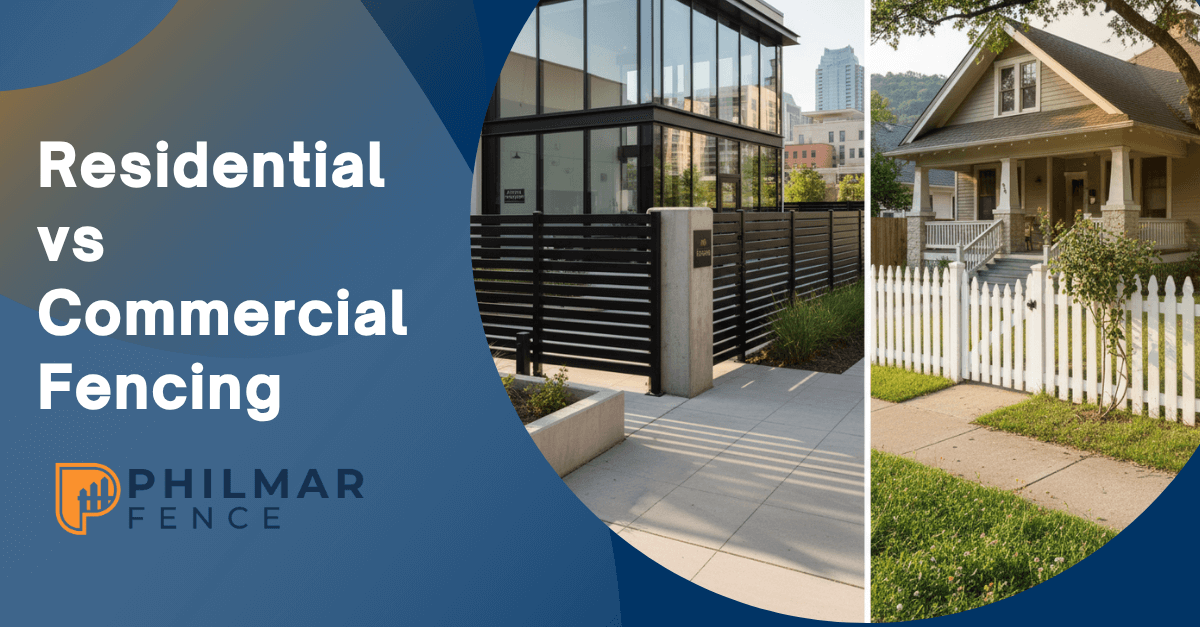
The US Fencing market is expected to expand to USD 14.86 billion in the year 2033. It signifies the ever-growing need for fence installation. Sooner or later, you will also be the one deciding between commercial vs residential fences for your property in Austin.
Choosing the right fence for your property can be tricky if you don’t possess a sound knowledge of them. So, read on & equip yourself with all the crucial details!
The main difference between residential and commercial fencing is purpose and scale. Residential fencing provides privacy, security, and aesthetic value for homes, while commercial fencing secures larger properties, protects assets, and restricts access. Commercial fences often use steel or chain link, while residential fences use wood, vinyl, or decorative metal.
Features | Residential Fences | Commercial Fences |
Core Benefits | Aesthetic appeal, privacy, safety of pets/children, boundary marking | Security, controlled access, employee safety, boundary demarcation, noise reduction |
Material Selection | Typically, lightweight materials such as wood, composite & vinyl | Chain link with slats, welded steel, heavier-gauge metals, wrought iron |
Foundation Adaptability | They are often installed on standard soil without an engineered foundation. They may experience shifting over time due to Austin’s unique soil dynamics (undergo shrink-swell cycles) | Generally anchored with reinforced concrete footings to withstand wind load & expansion of clay soil |
Security Integration | Basic gates & locks | They have access control panels, motion sensors & CCTVs |
Installation Complexity | Can be installed within shorter spans by local contractors | Installation can take time because it is generally accompanied by inspection, concrete curing & site grading |
Climate Resilience | Vinyl & wood can fade when exposed to Austin’s intense UV rays. Moreover, Austin’s fluctuating humidity can cause cracking & deformation. | Galvanized steel & commercial-grade coatings can resist UV degradation much more effectively |
Customization | Customization potential is very high | Customization potential is slightly limited because the fence has to be standardized for safety & efficiency |
Price Difference | Upfront cost is moderate varying with design & material selection | High upfront cost |
Durability | Needs periodic painting & sealing & is less durable than the commercial fence | Have significantly longer lifespans with lower long-term maintenance costs |
Want to get expert consultation to help you learn your options better and make a well-informed decision? Call (512) 910-0111 to get started now!
Choose the right fence for your Austin property by matching material, purpose, and design to your needs. Use wood for privacy, vinyl for low maintenance, or wrought iron for durability and style. Check local zoning codes and consider climate to ensure long-term performance and compliance.
A micro-site assessment is crucial considering Austin’s terrain, expansive soil hazards & laws. These factors can significantly impact the installation method & the suitability of different types of fences.
For instance, if you are living in an area having high wind pressure, you should go for a chain link fence with slats. Additionally, if your area has a high burglary rate (6% increase has been observed for Austin in comparison to 2021), you should opt for a fence having strict security integration to cater to this.
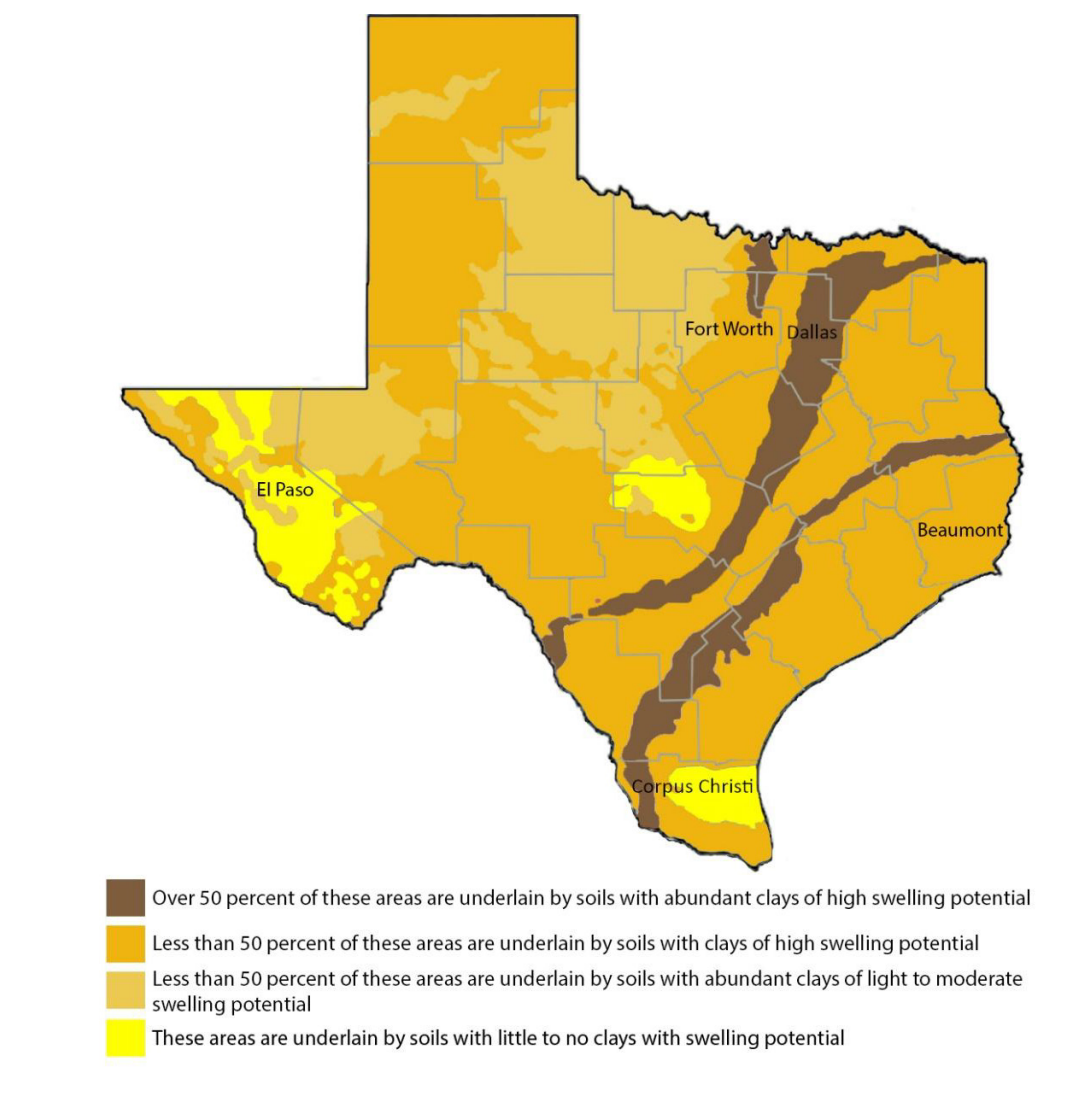
Source: University of Texas
Before opting for a fence, decide on its purpose of installation. Varied purposes, for instance, security, aesthetics, and pet contaminants, demand different types of fence with customized specifications. If you want privacy, go for solid panels, for instance of wood or vinyl, to block visibility. If your goal is to add curb appeal, decorative panels should be your ultimate choice.
Analyze how materials respond to Austin’s specific conditions. For example, while considering wood, you can’t skip on the factor that moisture is potentially damaging for wood & and causes its degradation. On the other hand, steel has higher security & long-term durability. Vinyl undergoes thermal decomposition in case of excessive heat exposure. So, choose what suits your goal.
Do consider the long-term performance of your selected fence. For instance, wood fences will need sealing & repainting every 2-3 years owing to Austin’s weather conditions. On the other hand, chain link fencing lasts longer with minimal maintenance. Similarly, redwood cedar fences can last for 20+ years. As per Austin’s conditions, go for fences with corrosion-resistant finishes & UV stabilizers.
Want to ensure no violation notices are received later? Hire an expert like Philmar to install your fence while complying with the local codes. Call (512) 910-0111 to get started now!
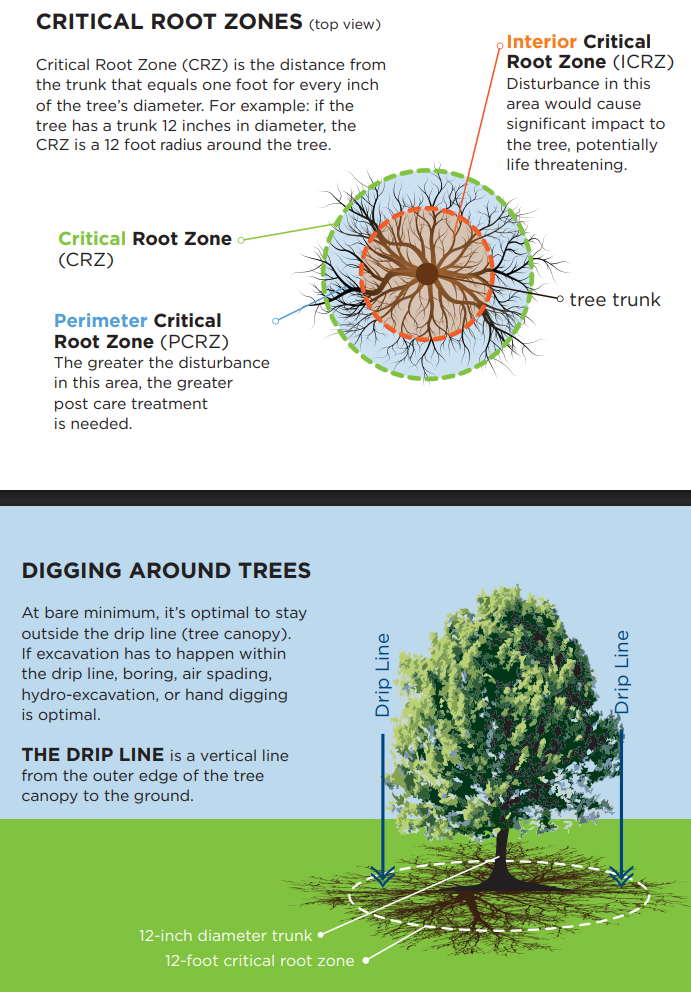
For fence installation, removal of a tree that is 19 inches or taller requires a permit except for a few species. Digging within a critical root zone (CRZ) will be regarded as a site disturbance & can lead to a penalty. So, you have to keep this factor in consideration.
Use of materials or construction of a fence in a way that redirects storm runoff without allowing it to soak into the ground can damage the neighboring household or property. Under Texas law, you will be held accountable for this incurring damage. Fence repair & installation companies in Austin have extensive knowledge about these restrictions and can work out the way for you.
The Austin Fire Department has evaluated & devised fire ratings for fencing based on their combustion potential. Non-combustible materials should be strictly used for fence installation as they significantly mitigate the risk of fire propagation & fire damage.
Residential vs. commercial fences in Austin serve different purposes, and each of them has specifications as per their targeted use. Out of a myriad of options available, Philmar can help you choose the right one for you after a site assessment, deciding on the usage, material analysis & long-term implications. Being a local fence company in Austin, Phillmar understands the local codes, environmental aspects, and what's common in the neighborhood in terms of materials, design and fence types. So call (512) 910-0111 to get started today!
Certain limitations do exist as per the regulations. For instance, go for Cedar or Wolmanized pine. In addition, if you opt for timber, then you have to ensure that it is devoid of any decay or splits that raise questions about its structural integrity.
No, any particular restrictions to be mentioned haven’t been imposed when it comes to the usage of fencing material.
For fence installation, you can consult any reputable company specializing in fence repair & installation in Austin. They offer the best recommendations as per your requirements.
The main difference between residential and commercial aluminum fences is durability and design. Residential aluminum fences use thinner rails suited for homes and light use, while commercial aluminum fences use thicker, reinforced rails for higher security and traffic areas like offices or schools.
Residential fences cost lower per foot than commercial fences. For instance, commercial fence costs range from $25 to $60 per linear foot, depending on height, material, and security features. Residential fences typically cost $15 to $40 per linear foot due to lighter materials and simpler installation. Commercial fencing often includes heavier posts and gates, increasing overall project cost.