



Looking to refresh your old fences or install new ones? We’re the team you need! Reach out to us today!
Lasting from June through September, Austin's summer can be extremely hot and humid. The temperature regularly exceeds 100°F, persuading residents to stay indoors.
The extreme heat can take a toll on your fence. This is especially true if the fence is made from materials that are susceptible to extreme heat, direct sunlight, and occasional heavy rains. In this case, fence maintenance Austin summer is a necessity!
So read to find how to prevent fence warping and sun damage during this hot season.
A warped fence is a wooden fence with boards that have bent and twisted out of its original straight shape.
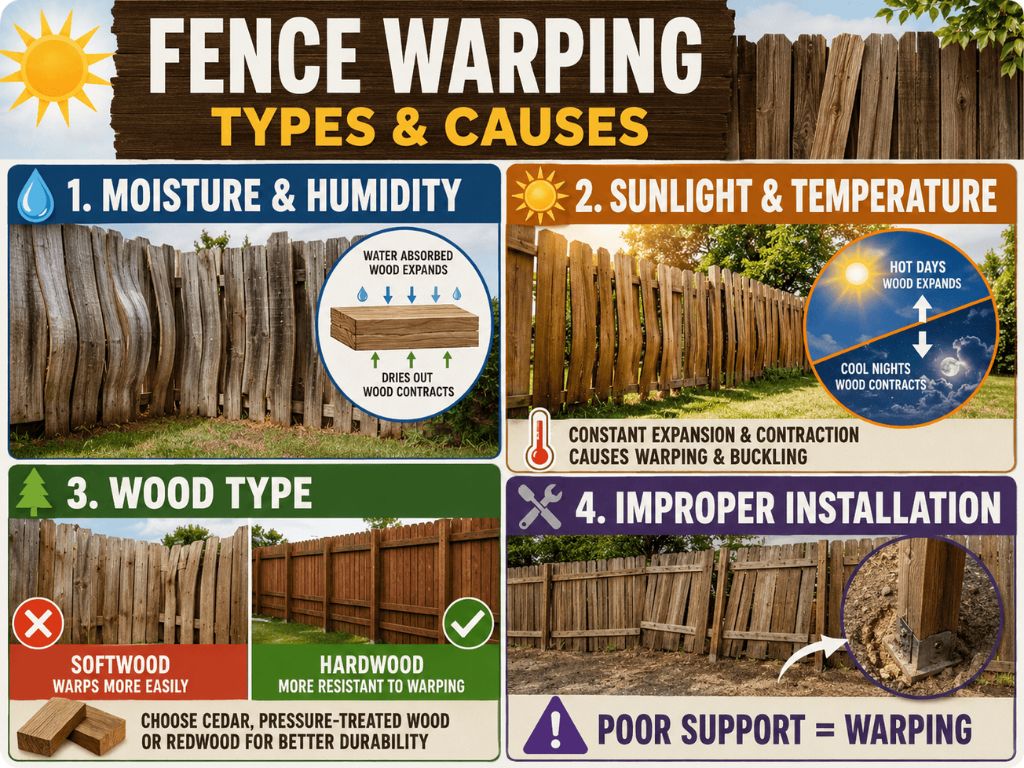
There are multiple causes of a warped fence in Austin summer.
Austin summers have high humidity levels with muggy conditions.
Moisture is the primary cause of warped fence panels in the summer.
When water interacts with your wooden fence, the wood absorbs the water and expands. When the wood dries out, it contracts. Over time, this can lead to warping.
Fences can also expand and contract when exposed to direct sunlight. The daylight hours in summer are long.
Days usually start with 14 hours of sunlight in June, going down to 13.5 hours of daylight in July and August.
Changes in weather and daylight cause constant swelling and shrinking, which makes the wood warp or buckle.
Fence material type affects its longevity a lot. Softwoods warp more easily than their harder counterparts. If your fence is made of softwood, it’s more likely to warp or twist. Therefore, opt for hardwood, pressure-treated wood and redwood for your fence.
Sometimes an improper installation of your fence can cause it to warp. For instance, a poor structural support to hold the panels in place can cause the fence to warp in summer.
Save your fence from warping in the Austin summer using these tips.
Before anything else, you need to choose the right material for your fence. To stay safe, consider getting high-quality and pressure-treated timber.
These panels are designed to resist weather-related movement. Besides, they also last longer through seasonal changes.
In many parts of Austin, the soil is mostly expansive clay. The intense heat of July and August shrinks and cracks the soil. This can cause the fence posts to shift.
When the ground moves and shifts, it puts stress on the fence panels. The structural stress forces the fence to bow or lean.
To prevent this from happening, make sure that the fence posts are strongly set deep in the ground. The experts should anchor them with a concrete collar.
To save your fence from warping and sun damage this summer, do the water-bead test as a quick measure.
Often used to check the paint requirement of a surface as well, this test can help you know if your fence is ready for the summer or not.
Simply splash some water on the fence.
If the wood beads up, your sealer is still working.
However, if your fence soaks up the water immediately, it is vulnerable to warping in the Austin summer.
In that case, you shouldn't wait and call a professional for a reseal before the July heat peaks.
To prevent your fence from warping, it is best to schedule fence maintenance in late spring or early summer (before July).
During their visit, the experts can apply protective sealants and stains on your fence to prepare it for Austin's high heat and humidity.
Regular maintenance that generally includes cleaning and sealing should be done annually. This prevents the wood from absorbing moisture and warping.
If your lovingly-built fence is the best part of your house, you shouldn't wait for it to experience the wrath of Austin's heat and humidity. Prepare your fence to stay put even if the sun shows up every day.
Not sure how to prevent your fence from sun damage and warping? Instead of DIYing its maintenance, call Philmar as your fence experts.
From applying a proper sealant to ensuring its structural integrity, we can help you keep your fence to stand firm against the heat. Call today for an inspection and a plan to make your fence look new this summer.
Composite fencing and masonry/stone hold up best because they do not warp or shrink when exposed to intense UV rays. For wood options, Western Red Cedar is highly resilient due to its natural oils, though it still requires protective coatings to prevent UV fading over time.
You should apply a high-quality UV-blocking stain or sealant every 2 to 3 years to maintain adequate protection against severe sun exposure. A simple way to check is the water test: if water drops absorb into the wood rather than pooling on the surface, it is time to reapply.
Yes, trapped heat raises the surface temperature of the fence material, accelerating the drying out and warping process of the wood cells. Allowing space beneath the fence and avoiding dense, unpruned vegetation helps heat dissipate naturally and keeps temperatures stable.
Yes, blocking direct sunlight lowers the surface temperature of the material and minimizes the cellular breakdown caused by UV radiation. However, ensure that overhanging branches or climbing vines do not trap moisture or rub against the surface, which can lead to rot or physical wear.
Look for hairline surface cracks (checking), a grayish discoloration on the wood, or small gaps opening up at the joints where structural boards meet. If you notice screws or nails beginning to back out or pop loose, it means the wood is starting to dry out and shift.